
Richard’s Story: The Urgent Need for Suicide Prevention and Mental Health Support in the Prison Service
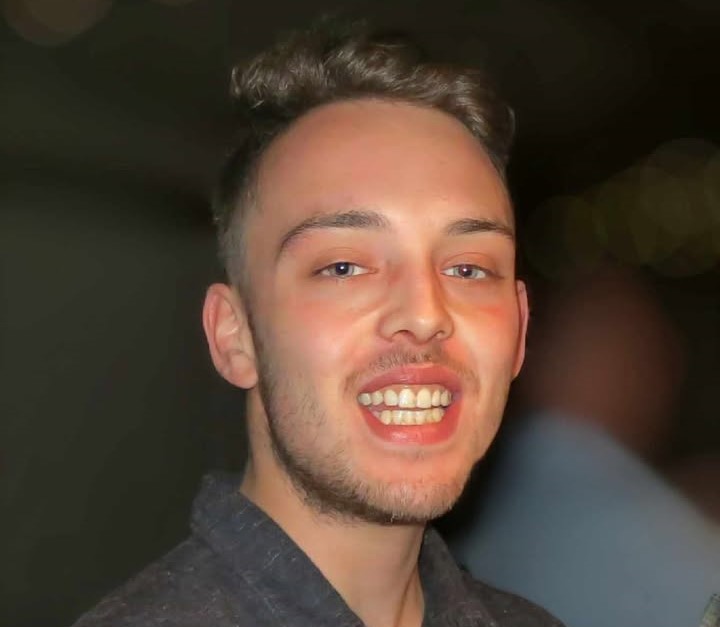
Photo of Richard Symons, shared with permission by his family.
Mental health and wellbeing among prison staff is an issue that continues to demand urgent attention. Across the UK, officers face daily pressures that can have a lasting impact — often unseen and too often unsupported. At UKPS Network, we stand with staff and families affected by these challenges, and we support organisations such as Campaign Against Living Miserably, who provide vital help to those in crisis.
Today, we are sharing Richard’s story — to remember him, raise awareness, and encourage change.
Richard’s Story (as shared by his parents, Maria and Rod)
Our son Richard, a former Prison Officer, died by suicide on 4 June 2024. Richard spent nearly 10 years in the prison service, first as an OSG and then as a prison officer, with all his service at HMP Whitemoor. His death has changed our lives forever.
Richard had struggled with his mental health for 2–3 years before his death, due to both personal and workplace issues, which became deeply intertwined. In May 2024, he handed in his resignation and was signed off sick during his notice period. Tragically, the day he died was also his final day of service.
Richard left notes explaining how his experiences at work had affected him — he spoke about loving his job, but also that it was “killing him.” He described what he experienced as a toxic workplace, poor professional standards, failures to act on incident reports, and a lack of care for staff wellbeing.
In the months before his death, another officer from HMP Whitemoor also died by suicide. Two deaths within three months raise serious concerns about support, policies, and duty of care within HMPPS.
Following Richard’s death, an external enquiry by the Ministry of Justice identified serious failings, missed opportunities, and poor practices. An action plan containing around 16 recommendations was produced, yet questions remain about whether staff are aware of these changes and whether they are being properly implemented.
In June 2025, Phil Copple stated that there was a commitment to ensure Richard’s legacy would improve support for staff — but many are still asking if real change is happening.
Richard’s family continue to fight for answers, accountability, and improvements that could prevent future tragedies.
Richard’s sister, Lauren, is taking on an incredible challenge by walking 50 miles in his memory to raise funds for Campaign Against Living Miserably. This is not only a fundraiser, but a powerful act of love and remembrance, helping to highlight the importance of mental health support and reminding others that they are not alone.
If anyone would like to support Lauren and her incredible effort, please click here.
At UKPS Network, we are aware of many sad stories like Richard’s. From time to time, families and friends reach out to us to share remembrance posts on our Facebook page. Too often, suicide is something people feel is not welcome to be spoken about — but this must change.
Together with people like Maria, Rod, their daughter Lauren, organisations such as Campaign Against Living Miserably, and by engaging with research from the Centre of Excellence for Equity in Uniformed Public Services at Anglia Ruskin University, we will continue to raise awareness, promote wellbeing, and push for meaningful change so that every voice is heard and no one feels alone.
On behalf of UKPS Network and our followers, we would like to thank Maria, Rod, and Lauren for their courage and determination in sharing Richard’s story. Their strength is helping to raise awareness and push for change that is so urgently needed.
If you are struggling right now or having thoughts of suicide, please speak to someone you trust — a friend, family member, or colleague. You are not alone. You can also contact Campaign Against Living Miserably on 0800 58 58 58 or Samaritans on 116 123, both available 24/7.
In an emergency or if you are in immediate danger, please dial 999.
UKPS Network Team
8 comments - Richard’s Story: The Urgent Need for Suicide Prevention and Mental Health Support in the Prison Service
---
💬 Revised Personal Comment
Richard was my nephew, and losing him has changed our family in ways we are still trying to understand. He was such a gentle, thoughtful person, and it hurts to know how much he was carrying on his own while trying to stay strong for everyone around him. There isn’t a day when we don’t feel the ache of him not being here.
Watching my sister Maria, my brother in law Rod and my niece Lauren move through their grief while fighting so hard to make sure Richard’s story is heard has been incredibly moving. They are doing it out of love and out of a hope that no other family will ever have to face what we have. No one should have to push this hard just to be listened to.
Richard cared deeply about his work and gave so much of himself to it. Knowing how unsupported he felt, and how much he needed help that never came, is something that will stay with us forever. His experience should matter. It should lead to real change that genuinely protects the wellbeing of the people who show up every day to do an incredibly difficult job.
I am proud of my family for their strength, and I stand with them completely. Richard deserved better. Prison staff deserve better. His legacy should become the change he never had the chance to see.
But if we are honest, it won’t be - unless people are willing to face what is really happening.
Because this is not shocking to those of us who have lived it.
It is familiar.
At the very beginning of my career, I was seriously assaulted in the prison service. The incident was so significant it was later referenced during the Zahid Mubarak Inquiry, where I gave evidence.
It should have exposed failures.
Instead, it was downplayed and buried.
That was my introduction to the culture.
I spent years reporting serious concerns - misconduct, unsafe practices, failures in leadership. I followed the rules. I used internal processes.
Nothing changed.
What did happen is this: I was pushed out.
Years later, a member of management admitted to me that I had been deliberately removed because I “knew too much.”
So let’s stop pretending this is just about mental health awareness.
People are not breaking because they are weak.
They are breaking because they are working in environments that grind them down, silence them, and then discard them when they speak up.
For 15 years, I have stayed connected to staff across the prison estate. Different prisons. Same story.
Concerns raised;
Nothing done;
People targeted;
Culture protected.
We talk about wellbeing, yet ignore the conditions that are destroying it.
We talk about support, yet many are too afraid to speak honestly internally because they know the consequences.
We talk about lessons learned, yet the same patterns repeat - over and over again.
How many more officers have to reach breaking point?
How many more families have to bury their loved ones?
Two deaths in such a short space of time is not coincidence. It is a warning.
And warnings have been coming for years.
I reached a point myself where I did not want to be here anymore. Others didn’t make it through. That is the reality behind the statistics.
So this needs to be said clearly.
This is not just a wellbeing issue.
This is a leadership issue.
This is a culture issue.
This is an accountability issue.
Until those things are confronted honestly, nothing meaningful will change.
You cannot fix this with statements, action plans, or carefully worded commitments that never reach the frontline.
You fix it by listening to the people who have been speaking up for years - and protecting them when they do.
Richard’s story must not be another moment that fades.
It should make people uncomfortable.
It should raise serious questions.
And it should force change.
Because right now, the system is still failing the very people it relies on.
And people are paying for that with their lives.
I’m surprised I’m still here.
I’ve reached points in my life where I didn’t want to carry on. That truth is why I refuse to stay silent now. My strength comes from having lived through it, survived it, and learned how to cope - managing my emotions, taking on projects, finding ways to rebuild each time. Every success reminds me of those still struggling inside the service. I had loved my job and undertook specialist training like others do - many of us who have since left the service had excelled in our roles yet this was hardly ever acknowledged as being as valuable as it is.
Richard’s story is devastating. His death should never have happened. But it won’t be the last if we keep ignoring the system that drives people to this point.
Let me be clear: my problems were never with those in custody. Many were a joy to work with when given the chance to rehabilitate. The real damage came from within the service - from ineffective leadership, failures to act, misogyny from senior grades, personal insults about how I chose to live my life, and being pushed out for speaking up. I was even spied on while off work, pulled in for a night out with friends while under doctor’s orders to take care of myself and not stay home alone.
This is not isolated. For 15 years I’ve raised concerns about misconduct, unsafe practices, and poor leadership. I can evidence everything I say. I have spoken up, shared information, and nothing changed. I was deliberately removed because I “knew too much.”
Richard’s story - and the stories of other families willing to share their pain - need to travel as far and wide as possible. Because seeing it makes people think about joining the service - and that reality cannot be ignored. And it shows those suffering that they are not alone. The pain never fully leaves, but knowing others share it can make a difference.
Change is possible. I have been working on a framework to improve support through better training, leadership accountability, and understanding behaviour - including encouraging leaders to reflect on their own actions. People should join the service knowing they will be backed up, supported, and treated fairly. That is what will prevent tragedies, not posters, policies, or lip service.
How many more warnings are needed? How many more lives lost before the service finally acts?
I am open to being contacted by anyone who wants to make a strong case for better support. I will speak to media, provide evidence, and share what I know. This is not about me. It is about making sure the people who dedicate their lives to this work are protected - and that tragedies like Richard’s are stopped wherever possible.
I also believe the voice of people like myself - and others who will admit to having contemplated suicide - could be a key part of real change. Speaking from experience, we can help bring in the right kind of solutions, using our voice as a way to honour and represent those who are sadly no longer with us. Their lives, their stories, and their warnings should never be forgotten.