
“Unsafe, Understaffed, and Unheard”: Staff Speak Out on HMP Addiewell
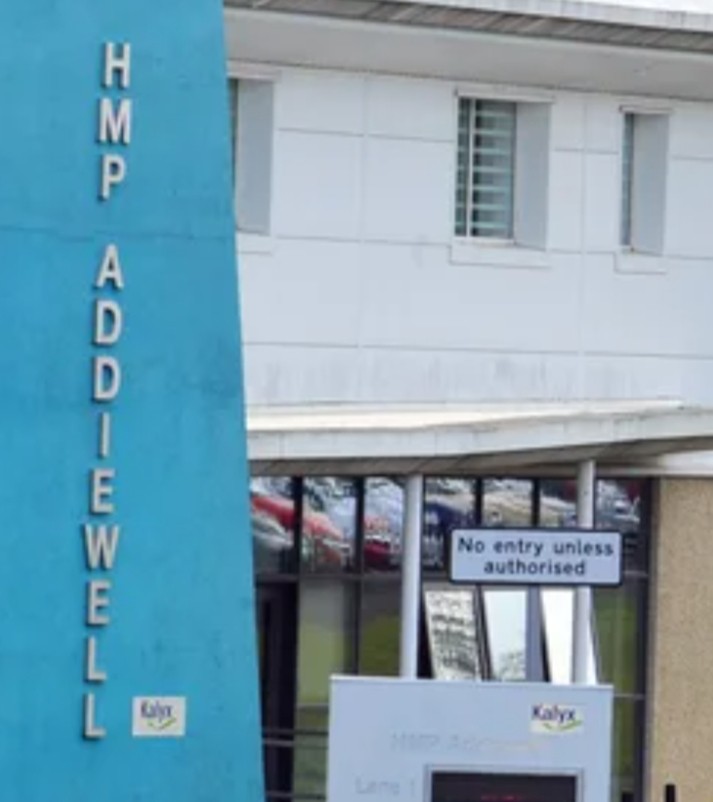
Recent reports shared with UKPS Network raised serious concerns about safety, control, and professionalism inside HMP Addiewell, which has been operated by Sodexo Justice Services on behalf of the Scottish Prison Service since opening in December 2008 and holds around 700 men. Allegations of prisoners openly taking drugs, dancing on wings, and a lack of supervision prompted us to speak directly with current and former staff.
The response was significant. Over 50 accounts were received, many of which were shared anonymously on our Facebook page in recent days, all pointing toward similar issues—suggesting this is not about isolated incidents, but a deeper, ongoing problem.
A Prison Losing Control
Many staff described an environment where control on the wings has weakened. Prisoners were said to act with increasing freedom during association, with some officers admitting the focus had shifted from maintaining order to simply getting through the shift safely.
Drug use, violence, and disorder were repeatedly mentioned. Several contributors stated that basic security procedures were either ignored or inconsistently applied, creating a culture where boundaries became blurred and authority reduced.
“It wasn’t the prisoners I feared — it was the lack of support.”
Some accounts also pointed to how this culture is perceived internally:
“I’m not going to mudsling — I’ll just say what it was like for me. I did nearly six years, which is seen as ‘very experienced’. There were good and bad seniors. The training staff were some of the best people I’ve met and I’d still go to them for advice. On the wings, solid staff and good seniors made it work day to day.
But staffing levels were abysmal. Visits were always a struggle to cover and if there weren’t enough staff, halls would be shut. Most prisoners knew who was fair and decent — and you could talk situations down most of the time.
The real issues came from above. Decisions that didn’t make sense, lack of support, and poor mental health provision for both staff and prisoners. That’s what created risk. The job could look after itself most days — but the rest was heavy pressure and questionable decisions that put people in danger.”
There were also claims that the establishment had developed a reputation among some prisoners as being overly relaxed, further reinforcing concerns around control and consistency.
Understaffed and Unsafe
Chronic understaffing was one of the most consistent concerns. Officers reported managing wings of up to 70 prisoners with only two staff, and at times being left completely alone during active periods.
In such conditions, response times to incidents can be delayed and risks increase significantly. Accounts included serious assaults, large-scale fights, and situations where officers had to intervene without immediate backup. Equipment failures, including alarms not activating straight away, were also mentioned.
This combination of low staffing and high demand creates an environment where both staff and prisoners are placed at unnecessary risk.
Workplace Culture and Leadership
Beyond operational issues, many testimonies highlighted problems within the internal culture. Reports of bullying, favouritism, and unprofessional behaviour were common. Some staff felt unsupported by management, particularly when dealing with incidents or attempting to maintain standards.
There were also concerns about blurred professional boundaries, with claims that overfamiliarity between staff and prisoners had become normalised in some areas. Officers who tried to uphold stricter standards often felt isolated or moved between posts following complaints.
Mental Health and Support
The impact on staff wellbeing was clear throughout the responses. Officers spoke about exposure to violence, threats, and traumatic incidents, often without meaningful follow-up support.
Some described feeling dismissed after serious events, while others highlighted a culture where admitting struggle was discouraged. In an already high-pressure role, the lack of consistent mental health support appears to be pushing many to leave.
Experience Gap and Training Issues
While some praised elements of training, others felt unprepared for the realities of the job. Inexperienced staff were frequently placed in demanding situations without adequate guidance.
With many experienced officers having left or retired, there is now a noticeable gap in knowledge and leadership on the landings. New staff are often learning in real time, without seeing what a well-run, controlled regime should look like.
This lack of experience can lead to relaxed standards, inconsistency, and increased vulnerability to manipulation or conditioning.
A Wider Problem
It is important to recognise that these concerns are not limited to one establishment. Across the UK, prisons are facing recruitment challenges, long vetting processes, and difficulties retaining staff.
As numbers fall and experience declines, some establishments are forced into survival mode—prioritising short-term stability over long-term standards. This can result in prisoners having greater influence over daily routines and staff having less control over the environment.
Conclusion
The testimonies gathered present a concerning picture of life inside HMP Addiewell. While experiences may differ, the consistency of these accounts cannot be ignored.
This is not about assigning blame, but about highlighting what staff are saying from within the system.
If prisons are serious about improving recruitment, they must first address the fundamentals: safety, structure, and support. New officers need confidence that they are entering a controlled and professional environment where their wellbeing is protected.
Accounts suggest that in some cases wings are operating without sufficient supervision, creating dangerous conditions where both staff and prisoners can be seriously harmed. Situations like this quickly shape public perception and damage the reputation of the role.
Without real change, recruitment will continue to suffer—and the system will remain under increasing pressure.
The question is whether these voices will finally lead to action.
Response from Sodexo
A spokesperson for Sodexo Justice Services said:
“It is well documented that all prisons are challenging environments, currently facing increased population and operational pressures.
While we don’t comment on individuals, we want to be absolutely clear that the safety and wellbeing of our staff at HMP Addiewell is our highest priority. Over the last two years, HMP Addiewell has made significant improvements in safety, which has been achieved through additional recruitment, development, enhanced training and support for both frontline staff and managers.
Whilst we are never complacent; whilst incidents will happen from time to time and whilst there is always room for improvement, these measures have resulted in reductions in drugs use, violence and self-harm among prisoners, as well as improved retention rates amongst staff, and the delivery of a full, purposeful regime with a strong focus on rehabilitation and recovery.
Should any current or former staff have any concerns, there are well-established and confidential channels they can safely use when required. All concerns are taken seriously, and we constantly review our activity, along with regular feedback from Scottish Prison Services and independent monitoring agencies.”
UKPS Network would like to thank current and former staff for their courage in coming forward and sharing their experiences.
UKPS Network Team