
Everyone Is Warning — So Why Is Nothing Changing?
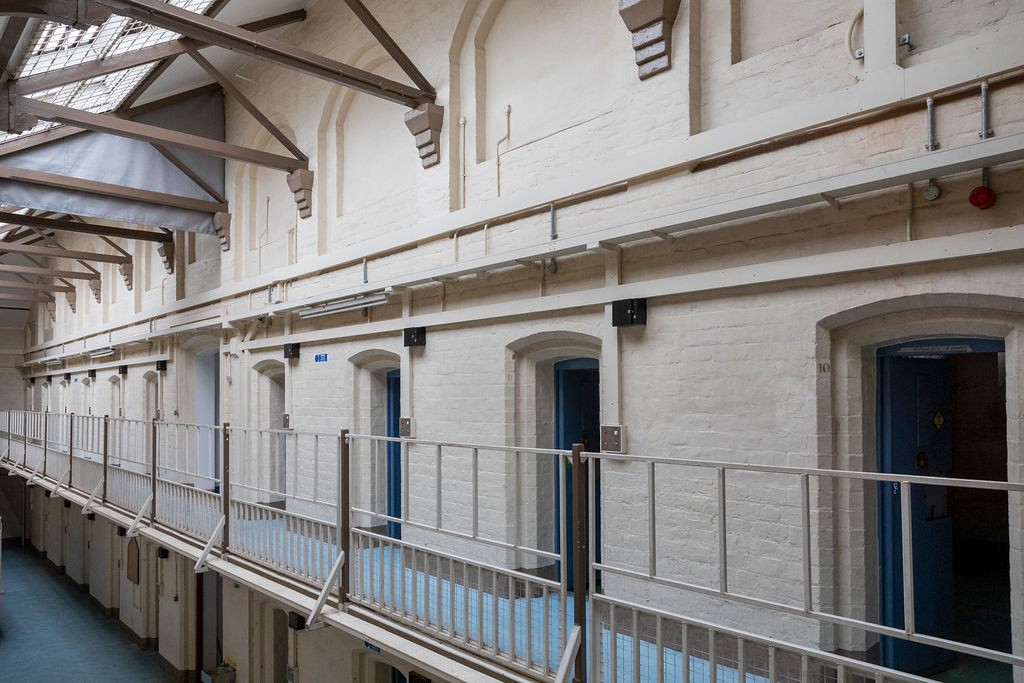
As we all know, for several — if not over a dozen — years, the prison service has faced ongoing staff shortages. The role is not adequately rewarded, and experienced staff continue to leave at an alarming rate.
The Ministry of Justice continues efforts to attract new recruits, but the reality on the ground tells a different story. Rising assaults on officers, lack of proper support for new staff, and limited access to consistent mental health care all contribute to a profession that fewer people are willing to join — or remain in.
Just last week, UKPS Network reported on conditions inside HMP Addiewell. Based on over 50 accounts shared directly with UKPS Network by current and former staff, serious concerns were raised around safety, staffing levels, and control.
Accounts described wings operating with minimal supervision, delayed responses to incidents, and increasing pressure on staff simply to get through the shift safely.
While not every establishment faces identical challenges, similar issues clearly exist across the system — including staffing shortages, declining experience, and, in some cases, concerns around professionalism and corruption.
At the same time, trade unions across the UK continue to raise serious concerns. Organisations such as the Prison Officers' Association, Scottish Prison Officers Association, Unison, and Public and Commercial Services Union regularly publish statements, give interviews, and describe the current state of the prison service as unacceptable. Conferences are held, and assurances are made that pressure is being applied to government to improve safety and conditions.
But this raises a simple and important question:
Is anything actually changing?
From the perspective of frontline staff, the answer is far less clear.
The latest figures published by the Ministry of Justice under its “Safety in Custody” statistics show the scale of the issue.
In the 12 months to June 2025, there were 10,477 assaults on staff — the highest level on record, representing a rate of 121 incidents per 1,000 prisoners (Ministry of Justice, Safety in Custody Statistics, England and Wales: year ending June 2025).
That equates to around 29 assaults on staff every single day — a figure that highlights the ongoing level of risk faced by officers across the estate.
These are not isolated incidents. They represent sustained pressure on staff across the system.
In recent years, additional use-of-force measures have been introduced — including handcuffs, PAVA spray, protective vests, and now the testing of tasers. These developments are often presented as progress. While necessary, they should not be viewed as exceptional achievements.
In many other countries, such equipment is standard. In the UK, these measures were introduced only after thousands of officers had already experienced assaults — some resulting in serious, life-changing injuries.
After years of facing violence, working in unpredictable environments, and dealing with increasing risk, these tools were finally authorised. It is right that they are now available. But should it have taken this long — and should unions have had to fight for what many would consider basic protection?
Providing essential equipment should not be seen as progress in itself. It should be the baseline.
Some would argue that the roots of today’s challenges go back further.
Since the introduction of the Voluntary Early Departure Scheme (VEDS) in 2010 — now over 16 years ago — a significant number of experienced staff left the prison service. While the intention may have been to restructure and reduce costs, the long-term impact is still being felt today.
The loss of experience created gaps that have never fully been replaced. In many establishments, new staff are learning in real time — often without the guidance of experienced officers who once formed the backbone of the service. Over time, this has contributed to a gradual decline in consistency, confidence, and control.
This leads to a wider issue.
Trade unions play an important role in representing staff. However, despite ongoing warnings, many of the core issues remain unchanged.
Staff continue to work in understaffed, high-risk environments, with recruitment struggles and declining experience levels.
So the question becomes not whether the problems are known — but whether the current approach is enough to resolve them.
Frontline staff are not only looking for acknowledgment. They are waiting for tangible improvements:
Fair and competitive pay
Housing support or allowances
Earlier retirement options
Recognition for years of service
Over time, many benefits have been reduced or removed. Today, what remains is limited — and for many, no longer reflects the reality of the role.
Some may argue that other emergency services also face risk — and that is true. However, the prison service remains a uniquely complex environment. Officers are responsible not only for maintaining safety and control, but also for supporting the rehabilitation of individuals who will eventually return to society.
This responsibility comes with challenges that are often underestimated, and with risks that are part of daily working life.
This is not about special treatment. It is about ensuring that the role is properly supported, fairly rewarded, and sustainable for those who carry it out.
This also raises a broader question about accountability.
Given the ongoing concerns around staffing, safety, and long-term decline, should there be greater scrutiny of how the prison service has been managed over the years?
An independent review could help assess whether past and present decisions have consistently been made in the best interests of staff, prisoners, and the wider public. It may also provide an opportunity to identify where lessons have not been learned — and what needs to change moving forward.
The question is whether such a step will ever be taken.
For now, many are left watching and waiting.
For those observing from the outside, this may not seem urgent.
But for those working on the landings every day, it is a very different reality.
We welcome responses from unions and organisations representing prison staff. We also welcome comment from the Ministry of Justice.
UKPS Network Team