
Howard League for Penal Reform Raises Concerns — But Staff Safety in YOIs Must Be Part of the Conversation
March 4, 2026 at 12:44 pm,
No comments
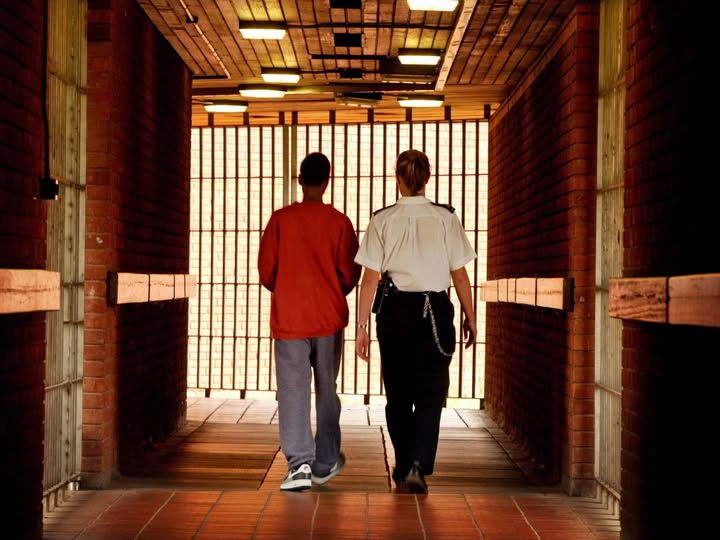
The recent commentary and reporting from the Howard League for Penal Reform again highlights serious concerns about conditions, education provision and the welfare of children held in custody. Their focus on safeguarding, purposeful activity and rehabilitation is important. Every professional working in youth custody understands that children in Young Offender Institutions (YOIs) must be treated with dignity and given real opportunities to change.
However, any balanced discussion must also acknowledge the full reality inside these establishments.
Many of the children held in YOIs are not there for minor offences. Some are serving sentences for extremely serious crimes, including murder, grievous bodily harm and violent robbery. A significant number have been involved in organised street gangs. While legally children, some present with behaviours that are highly volatile, deeply entrenched and, at times, very dangerous.
Most come from broken or highly unstable family environments. Many have experienced trauma, exploitation or neglect. That context matters — but it does not remove the immediate risks faced by staff and other young people inside custody.
Anyone who works in a YOI knows the environment can be hostile. Assaults on staff are not rare occurrences; they happen regularly. Some incidents are serious enough that staff members require hospital treatment. These are not abstract statistics — they are real injuries sustained by officers, educators and healthcare professionals simply doing their jobs.
It is within this context that prison staff unions called for the controlled rollout of PAVA (pepper spray) in YOIs. This was not about punishment. It was about protection. When violence escalates quickly, staff need tools to prevent greater harm — to themselves, to other young people and to colleagues. The decision to introduce PAVA followed repeated incidents where traditional control methods were insufficient to ensure safety.
Many commentators argue that relationships between staff and young people could be better. That may well be true in some cases. But rarely does the public debate offer practical, workable solutions for building and sustaining those relationships in environments characterised by gang rivalries, trauma, distrust of authority and chronic instability.
Young people in custody are often far more challenging to manage than adults in the prison estate. Many believe they know best, are highly influenced by peer status and may view the world — and authority — as fundamentally against them. In some cases, rival gang dynamics follow them into custody. Where opportunity arises, assaults on peers may be used to gain status or assert dominance.
In this climate, restrictions on free movement and keeping young people behind doors for controlled periods is sometimes one of the few effective measures to prevent violence — both against staff and between inmates. While such measures are not ideal and should never replace education or purposeful engagement, they can be necessary risk management tools in the absence of sufficient staffing and resources.
This brings us to another critical issue: funding and staffing shortages. YOIs have faced persistent challenges with recruitment and retention. Running safe, rehabilitative regimes requires adequate numbers of trained, experienced staff. Without that foundation, even the best-designed safeguarding policies struggle to function effectively.
It is also essential to remember something simple but often overlooked: staff are human beings. They are not robots. They come to work each day to protect the public and to support rehabilitation. They absorb verbal abuse, manage conflict and step into violent situations when alarms sound. They do this while knowing that an incident could leave them injured.
Acknowledging the concerns raised by charities about education, safeguarding and welfare does not mean ignoring the lived reality of frontline staff. A credible reform conversation must hold both truths at once:
Children in custody deserve safety, education and a real chance to change.
Staff deserve protection, adequate resources and the tools necessary to return home safely at the end of each shift.
If we are serious about improving YOIs, we must invest properly, address staffing shortages, support trauma-informed practice and maintain realistic security measures. Protecting children and protecting staff are not opposing goals. They are inseparable parts of the same responsibility.
Only by recognising the full complexity of youth custody — not just one side of it — can meaningful and lasting improvements be achieved.
UKPS Network Team